
How BJJ Gyms Create Supportive Communities
Practical strategies BJJ gyms use to welcome newcomers, set clear rules, build training bonds, run socials and use digital tools to boost member retention.
Written by BJJ Academy Finder Editorial Team
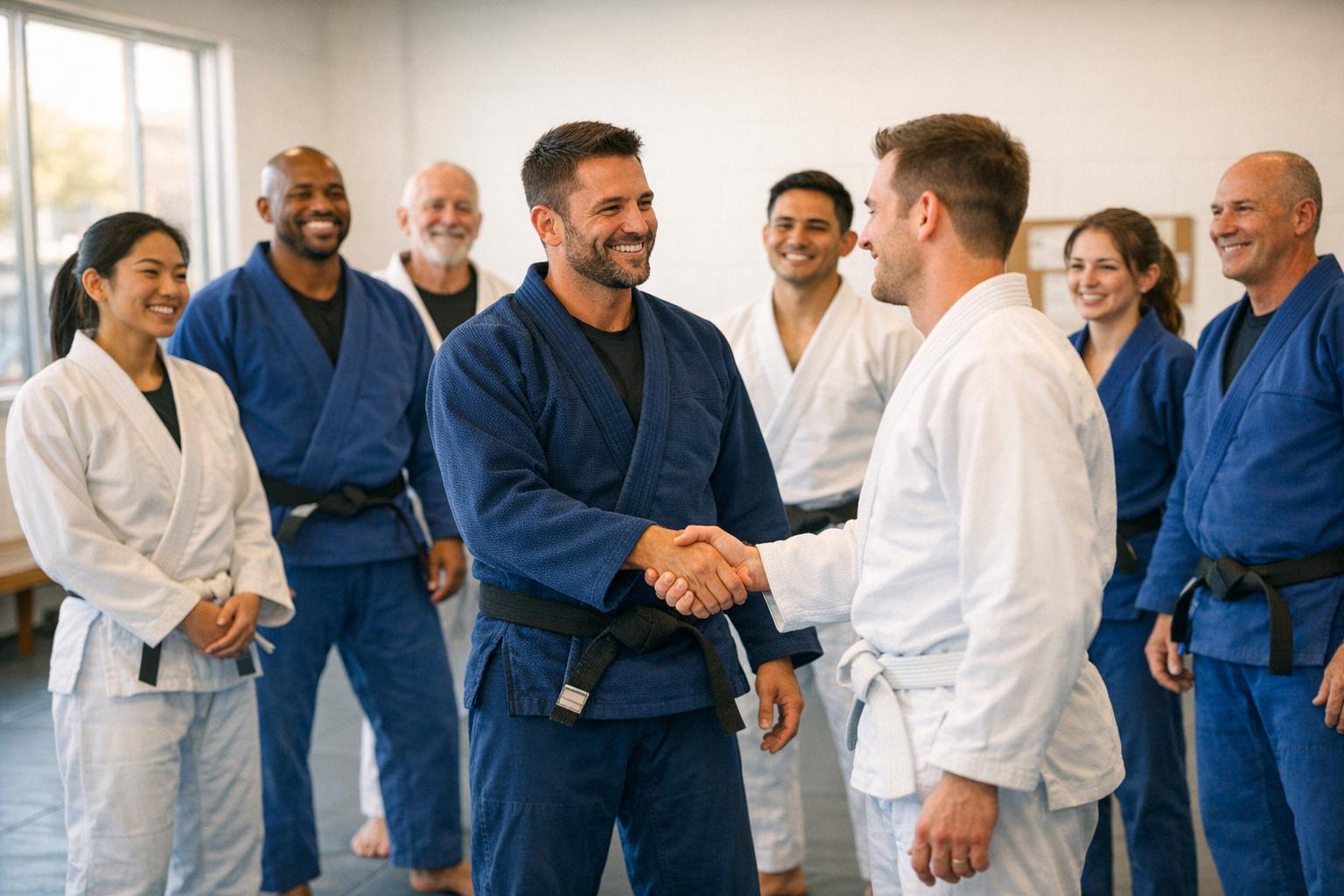
How BJJ Gyms Create Supportive Communities
Brazilian Jiu-Jitsu (BJJ) gyms thrive because they prioritize building strong communities. This sense of connection keeps members engaged and motivated. Here's how they do it:
- Welcoming New Members to find your perfect BJJ gym nearby: Simple gestures like remembering names, assigning mentors, and following up after classes make newcomers feel included.
- Clear Guidelines: Rules for hygiene, safety, and respect create a positive training atmosphere.
- Shared Effort: Partner drills, group activities, and recognizing progress help members bond through shared challenges.
- Beyond Training: Social events, charity initiatives, and competition support strengthen relationships outside the gym.
- Digital Tools: Social media, private groups, and gym management software keep members connected and engaged.
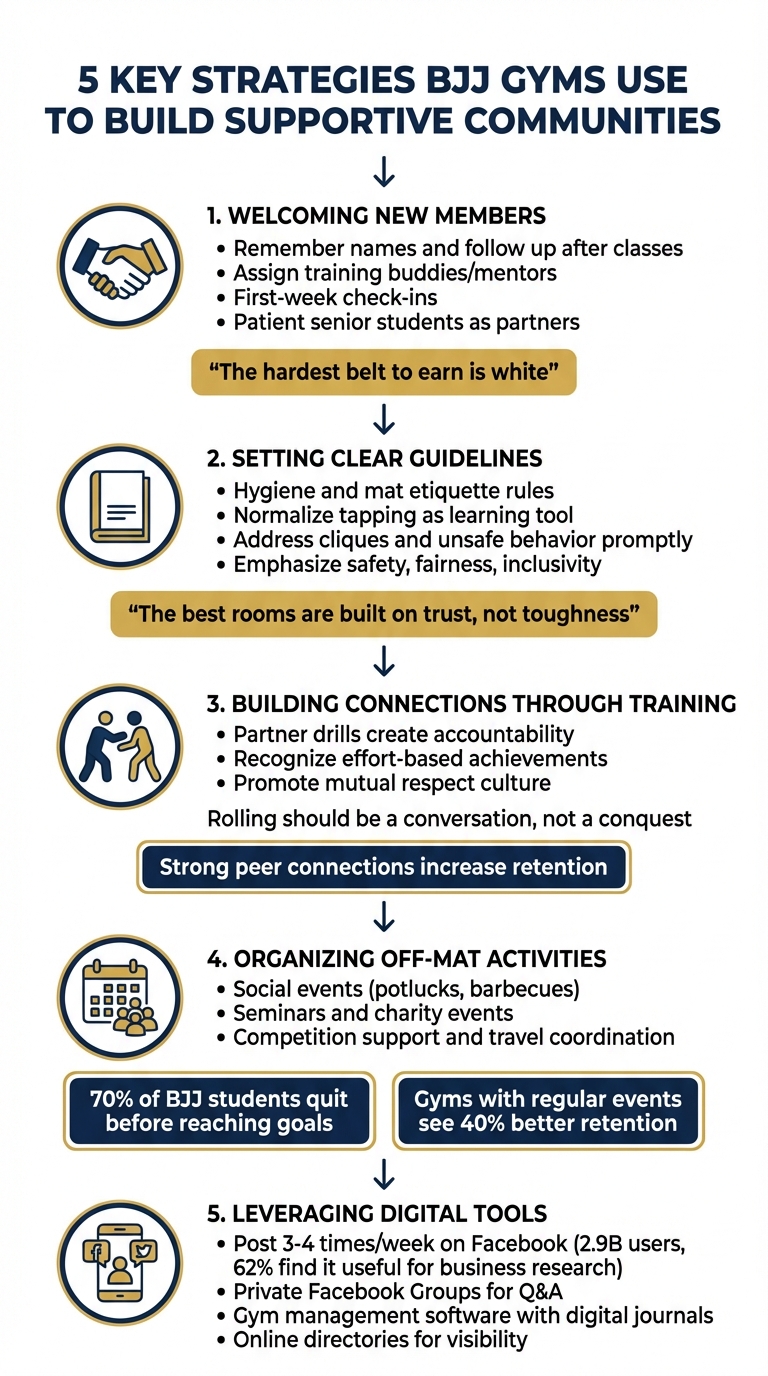
5 Key Strategies BJJ Gyms Use to Build Supportive Communities
What It Takes to Grow a Strong Jiu-Jitsu Community | The Academia BJJ Story
Creating a Welcoming Environment for All Members
The first few weeks are crucial for determining whether a new member becomes a long-term part of the gym or decides to leave. As MAAT aptly puts it:
The hardest belt to earn is white.
During this initial period, newcomers often feel out of place - unsure about gym customs and wondering where they fit in. To make them feel at home, it’s essential to have systems in place that ensure every individual, regardless of their background or experience, feels appreciated and included from the very beginning.
How to Welcome New Members
When someone steps into the gym for the first time, small gestures can make a big difference. Remembering their name, asking what brought them in, and following up after class can help establish trust early on. Faith A. Mooney from Atomic Jiu Jitsu highlights:
A sense of community is a key factor in whether someone sticks with Jiu-Jitsu long-term.
Successful gyms often go beyond these basics by incorporating thoughtful practices like first-week check-ins, assigning training buddies, and making open introductions before class. Pairing newcomers with mentors is another effective strategy. Mentors can guide them through gym etiquette and ensure they feel supported as they start their journey.
Additionally, tools like gym management software can help track attendance and remind staff to follow up with new members. Senior students also play a key role by being patient training partners, prioritizing the learning experience over competitive rolling. These efforts collectively create an environment where new members feel supported and encouraged.
Setting Community Guidelines
Clear and consistent guidelines are essential for fostering a safe and welcoming community. These guidelines should outline expectations for hygiene, mat etiquette, and respectful behavior. As MAAT explains:
The best rooms are built on trust, not toughness. And trust is built when everyone knows the rules, and believes they'll be upheld.
For example, normalizing tapping as a learning tool - rather than a sign of failure - helps manage egos and makes the environment less intimidating for beginners. Guidelines should also emphasize safety, fairness, and inclusivity, ensuring that everyone is treated equally, no matter their background. Addressing issues like cliques or unsafe behavior promptly helps maintain a positive atmosphere. Reinforcing these values during classes ensures they become part of the gym’s culture.
Keeping Facilities Clean and Organized
A clean and well-organized gym creates an immediate positive impression. Mary-Margaret Bennett, an expert in gym management, points out:
A clean, professional, and well-organized gym makes a powerful first impression. When a new student walks in, the environment should immediately say: This place is legit. This is where I want to train.
Regularly cleaning and sanitizing mats not only prevents infections but also signals professionalism. Safety checks should be routine to ensure the training area is free from hazards, and first-aid kits should always be fully stocked. Instructors certified in CPR and First Aid add another layer of security. Clean and well-maintained changing rooms and bathrooms further show that the gym values its members’ comfort and well-being.
When members see that cleanliness and organization are a priority, it reinforces the idea that the gym is a welcoming and professional space - one they’ll want to keep coming back to.
These foundational efforts set the stage for building meaningful connections through training.
Building Connections Through Training
The physical demands of Brazilian Jiu-Jitsu (BJJ) - the soreness, the fatigue, and the endless rounds - create a bond that’s hard to replicate elsewhere. As Jo-Lynn Kahala, a Purple Belt, explains:
There is something that brings people together when experiencing the daily struggles together. It's like, hey, we're in this together!
This shared effort turns training partners into something much closer to family. Facing the same challenges side by side builds a strong sense of camaraderie, transforming casual gym acquaintances into a supportive network. These connections are further strengthened through structured activities like partner drills and recognition practices.
Using Partner Drills and Group Warm-Ups
Partner drills naturally encourage accountability. Knowing someone is relying on you to show up can be a powerful motivator to stick with training. For beginners, these drills can feel less intimidating when framed as opportunities for cooperative learning. As MAAT puts it:
Rolling should be a conversation, not a conquest.
By prioritizing collaboration over competition, experienced members can focus on helping their partners improve. Assigning senior students as mentors or training buddies and encouraging quick reflections after drills can further deepen these connections.
Recognizing Member Progress and Achievements
In BJJ, recognition isn’t limited to belt promotions. As MAAT wisely points out:
The belt is a milestone, not a measure.
Acknowledging effort-based accomplishments - like a shy student leading their first warmup, someone returning after an injury, or hitting a personal attendance goal - fosters a sense of belonging. David Figueroa-Martinez, Founder of DFM Coaching, highlights this idea:
I have students who contribute far ahead of their competence... it's his leadership and contributions as a human being that consistently outpace his contributions on the mats.
Studies confirm that practitioners with strong peer connections are much more likely to remain engaged in the sport. Hosting promotion events twice a year and using digital tools to track milestones can amplify this sense of community while making individual progress more visible.
Building a Culture of Mutual Respect
The tone of a gym’s culture starts with its instructors. As MAAT succinctly states:
Your culture is what you tolerate and what you model.
Members naturally reflect the behaviors they see - whether it’s arriving on time, training with humility, or understanding that tapping is simply a part of learning. Sharing personal mistakes and emphasizing that the mats are a level playing field helps reinforce the idea that respect is earned through effort, not rank. David Figueroa-Martinez underscores this point:
The day one White Belt should have as much of a voice as the two decade old grizzled Black Belt.
Maintaining this respectful environment requires active effort. Unsafe behaviors should be addressed immediately, and cliques or negative talk should be discouraged. Encouraging knowledgeable students to lead Q&A sessions also promotes a culture of shared learning and mutual respect.
Steve Kwan, a BJJ Black Belt, captures the essence of this community:
The community element of Jiu-Jitsu is secretly the most important part. Techniques and trends come and go, but your tribe lasts a lifetime.
sbb-itb-d583f1e
Building Community Outside of Training
The connections formed during training sessions often evolve into something deeper when nurtured outside the gym. Shared experiences like meals, attending tournaments, or participating in seminars help transform training partners into a tight-knit community. These off-mat interactions allow members to see each other as more than just teammates, strengthening the bonds created during practice.
Organizing Social Events
Casual social events - like potlucks, barbecues, or team outings - offer a relaxed setting for members to connect on a more personal level. Imagine a surgeon discovering a shared love of fishing with a roofer during a barbecue. These moments remind everyone why they keep coming back: the sense of belonging.
Open mats and inter-gym visits also provide unique opportunities to meet practitioners from different backgrounds, exchange stories, and gain new perspectives. These events not only break the monotony of routine but also expand the community beyond the walls of the academy. Beyond casual gatherings, events like educational seminars or charity initiatives further deepen these connections.
Running Seminars and Charity Events
Seminars serve a dual purpose: they provide valuable learning experiences while fostering a sense of shared growth among members. Inviting guest instructors or hosting charity events introduces fresh techniques and reinforces the gym's core values. Steve Kwan, Founder of BJJ Mental Models, highlights the importance of generosity:
Generosity isn't just charity; it's one of the best ways to build trust.
Charity events, in particular, show that the community values more than just skill development. Whether it's raising money for a local cause or supporting a member in need, these initiatives demonstrate how generosity strengthens trust. Statistics reveal that 70% of BJJ students quit before reaching their goals, but gyms that regularly host events and actively engage their members see retention rates improve by up to 40%.
Supporting Members at Competitions
Tournaments can feel daunting, but a strong support system makes all the difference. When teammates show up to cheer, the atmosphere shifts entirely. Jo-Lynn Kahala captures this perfectly:
Behind you, is your professor(s) coaching your next move, your teammates screaming words of perseverance and maybe even some friends you met abroad cheering for you.
Gyms that prioritize competition support often use centralized calendars to track tournaments, registration deadlines, and divisions. This helps the team coordinate travel plans and show up as a unified group rather than scattered individuals. Back at the gym, teammates often ramp up their training intensity to help a competitor prepare, creating a shared sense of accountability and reinforcing the idea that everyone's success is interconnected.
Using Digital Tools to Connect Members
In the same way that in-person events build strong relationships, digital tools help keep those connections alive and broaden your gym's reach. Tools like social media, private messaging groups, and online directories give members a way to share their progress, plan events, and stay connected - even when they're not at the gym. For gym owners, these platforms also open doors to potential members actively searching for a training community. Let’s dive into how social media can strengthen your gym’s online culture.
Sharing Gym Culture on Social Media
Facebook plays a major role for Brazilian Jiu-Jitsu (BJJ) gyms, with 62% of users finding it useful for small business research. Given its massive audience of 2.9 billion active monthly users, it’s often the first stop for people looking for a gym. To stay visible without overwhelming your audience, aim to post 3–4 times per week. Share a mix of belt ceremonies, group photos, and short training videos to create a visual story of your gym’s journey.
Instagram is ideal for showcasing high-quality images of your training space and equipment, while platforms like TikTok and Instagram Reels shine when it comes to quick tutorials or behind-the-scenes moments. Just make sure to get explicit permission before posting images or videos of members. Some people prefer to keep their training private for personal or professional reasons.
For competitions or special events, Instagram Live offers a fun way to include traveling members. They can cheer their teammates on from anywhere, helping maintain a sense of community no matter where they are.
Creating Online Spaces for Member Communication
Private Facebook Groups offer a great way for members to ask technique-related questions, share achievements, and stay updated on gym news between classes. To keep the group active, gym owners can kick off discussions, but over time, members often take the lead. These groups are especially helpful for newer students who might feel more comfortable typing out questions than asking them in person.
Gym management software, such as MAAT, can deepen these connections further. Features like digital journals allow instructors to leave personalized notes for students, which can significantly strengthen member loyalty. Some platforms even include "At-Risk Dashboards" that flag members who haven’t attended recently, giving gym owners a chance to reach out before they lose interest. Monthly news updates through the software can also help reinforce gym values and share upcoming events with all members. These tools not only maintain relationships with current members but also make it easier to attract new ones through online directories.
Connecting with New Members Through Online Directories
Platforms like the Brazilian Jiu-Jitsu Gyms Directory (https://bjjacademyfinder.com) make it easier for potential members to find your gym. As Zen Planner points out:
If your academy doesn't have an optimized business profile on search engines, like Google, and crowd-sourced review sites, like Yelp - you're missing out on the possibility of ranking high on search engine results pages (SERPs)
These directories act as a trust-building tool, where prospects can review instructor bios, check out facility photos, and explore program details before visiting. To make the best impression, keep your profile up-to-date with accurate hours, current class schedules, and fresh photos. Positive reviews from satisfied members can also make a big difference - real feedback from actual practitioners carries more weight than any marketing campaign.
Conclusion
Creating a thriving community in your Brazilian Jiu-Jitsu gym doesn’t hinge on flashy marketing campaigns or state-of-the-art equipment - it’s built through consistent, meaningful actions that make every member feel seen and appreciated. Simple practices like assigning training buddies to newcomers or recognizing effort-based achievements can transform the atmosphere of your gym. As mentioned earlier, the culture you cultivate mirrors what you demonstrate and allow. When instructors lead by example - arriving on time, training with humility, and embracing tapping as an essential part of learning - students naturally follow suit.
The benefits of these efforts go far beyond the mats. Members develop lasting friendships, resilience, and a sense of belonging, while gym owners enjoy higher retention rates, enthusiastic word-of-mouth referrals, and a more harmonious environment that allows them to focus on teaching rather than resolving conflicts. As the saying goes, "Culture isn't fragile but it is perishable". Protecting your gym’s culture from negativity requires ongoing effort, reinforced through both personal interactions and digital tools.
Whether it’s planning monthly social gatherings, using software to monitor student engagement, or keeping your gym’s profile up-to-date on the Brazilian Jiu-Jitsu Gyms Directory, every detail contributes to the bigger picture. These strategies work because they prioritize authentic human connection. Most students don’t leave because training is tough - they leave when the environment feels unwelcoming or indifferent.
Start small: schedule a first-week check-in for new members and create an online space for your community to connect. Over time, these consistent efforts will transform your gym from just a training space into a vibrant, supportive community where people want to be - even on their hardest days.
FAQs
How do Brazilian Jiu-Jitsu gyms make new members feel at home?
Brazilian Jiu-Jitsu (BJJ) gyms are known for creating an inviting and supportive environment, where personal connections and clear guidance take center stage. From the moment someone steps through the door, they’re greeted with warmth, introduced to instructors and senior students, and given a quick rundown of essential gym etiquette. This includes practices like bowing before training, tapping out safely, and keeping the space clean. Many gyms also pair new members with a mentor or training partner to help them ease into their first classes and feel more confident.
Community is at the heart of BJJ culture, and gyms work hard to cultivate an atmosphere of inclusion and respect. Coaches actively promote open communication, celebrate milestones - like nailing a technique for the first time - and ensure that everyone, no matter their skill level, age, or background, feels appreciated. By leading with humility and respect, instructors set the tone for a welcoming space where everyone feels like they belong.
How do social events help build a strong gym community?
Social events are a cornerstone for building connection and camaraderie within a Brazilian Jiu-Jitsu gym. Whether it’s celebrating milestones, hosting casual get-togethers, or planning team outings, these gatherings create opportunities for members to form friendships and deepen relationships beyond the training mats.
By creating an inviting and welcoming atmosphere, these events do more than just boost morale - they also help members feel like they’re part of a close-knit family. This sense of belonging plays a big role in encouraging people to stay involved long-term, making social events a vital part of sustaining a strong and engaged gym community.
How can BJJ gyms use digital tools to build stronger communities?
Digital tools play a key role in helping BJJ gyms maintain strong connections with their members, both during training sessions and beyond. Through mobile apps, gyms can provide real-time updates, share valuable training tips, and send reminders about class schedules or upcoming events. Automated systems simplify tasks like attendance tracking, payment management, and even celebrating milestones such as belt promotions, creating a more tailored and engaging experience for members.
On top of that, features like digital progress tracking and gamified belt systems encourage members to stay consistent with their training. Social media and email updates are also powerful ways for gyms to showcase highlights, celebrate member achievements, and gather feedback. These tools not only make running the gym smoother but also strengthen the sense of community, making members feel more connected and appreciated.
Related articles
Share this article