
Yvone Duarte: First Female Coral Belt
Historic 43-year BJJ journey: Yvone Duarte became the first woman awarded a 7th-degree coral belt, pioneering women's divisions, training, and empowerment.
Written by BJJ Academy Finder Editorial Team
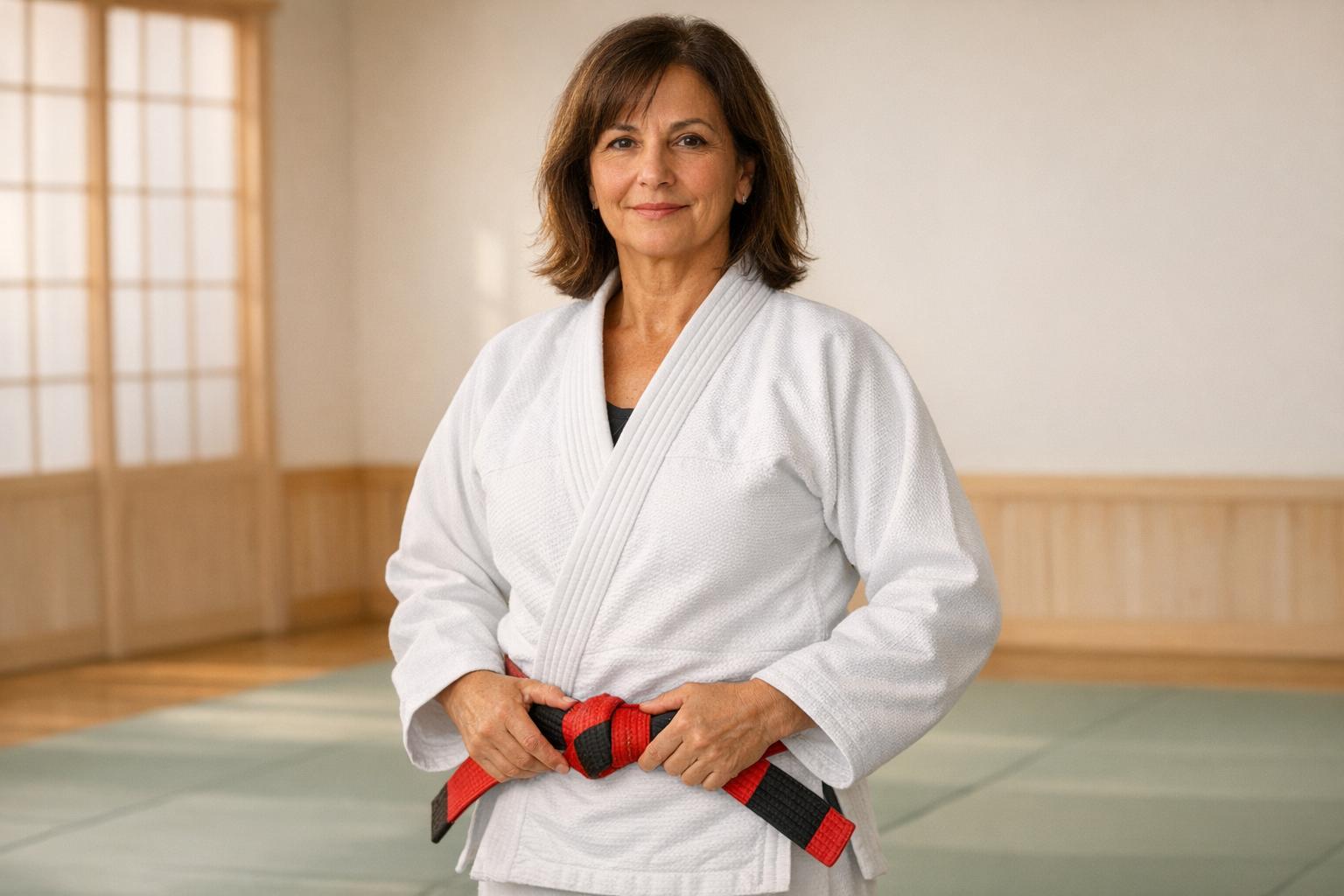
Yvone Duarte: First Female Coral Belt
Yvone Duarte achieved a historic milestone in Brazilian Jiu-Jitsu (BJJ) on August 26, 2021, by becoming the first woman to earn a 7th-degree coral belt. This rank, previously exclusive to men, reflects over four decades of her dedication to the sport. Duarte began training at 14 in 1978, overcoming significant barriers in a male-dominated field. She pushed for the creation of women's divisions in competitions, remained undefeated throughout her career, and founded the first BJJ academy led by a woman. Her coral belt promotion is not just a personal achievement but a symbol of progress for women in BJJ. Duarte continues to inspire others through her advocacy for safety, empowerment, and equality in the sport.
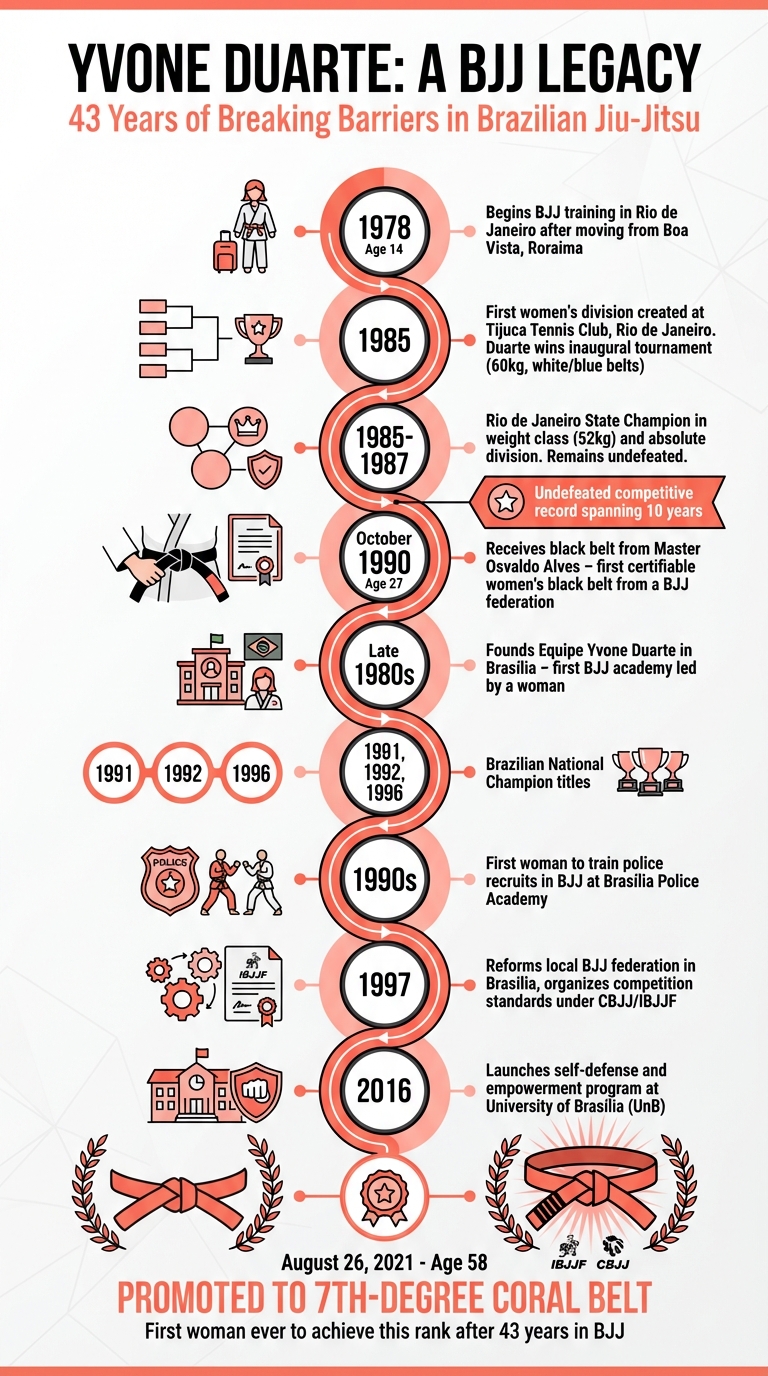
Yvone Duarte's Historic Journey in Brazilian Jiu-Jitsu: 1978-2021
Early Life and Entry into Brazilian Jiu-Jitsu
Childhood and Family Influences
Born in 1963 in Boa Vista, Roraima, nestled in the Brazilian Amazon, Yvone Duarte’s early life was shaped by an active, outdoor lifestyle. Her days were filled with adventures that helped her develop a strong athletic foundation.
Her father played a pivotal role in nurturing her athleticism, encouraging her to participate in sports like volleyball, handball, swimming, gymnastics, and basketball. This support paid off - she excelled in multiple disciplines, collecting medals during her teenage years.
At 14, her life took a dramatic turn when she left her rural hometown in 1978 and moved to Rio de Janeiro to live with her grandparents and siblings. The move was motivated by the lack of universities in Boa Vista, but the transition from a peaceful rural life to the bustling city left her feeling isolated. It wasn’t until her older brother, a purple belt in Brazilian Jiu-Jitsu, introduced her to the sport that she began to feel a sense of belonging. This introduction not only helped her find community but also sparked her determination to excel in Brazilian Jiu-Jitsu.
First Steps in Brazilian Jiu-Jitsu
Her brother, Pascoal, became her first mentor in Brazilian Jiu-Jitsu. Initially, Duarte doubted her ability to succeed in the sport, concerned that her 115-pound frame would be a disadvantage. But Pascoal reassured her, emphasizing that technique mattered more than strength. As he put it, "Don't think you have to be strong to be a Jiu-Jitsu athlete, what you have to be is technical. You already have two things in your favor: your flexibility and your speed. Not to mention, you are already a competitor."
Her passion for the sport grew even more after witnessing a legendary match between Rickson Gracie and Sergio Penha. The bout demonstrated how skill and strategy could completely shift the momentum of a fight, proving that Brazilian Jiu-Jitsu was about more than brute force - it was an art form.
Duarte’s training journey began with her brother and Sergio Penha before she joined the Osvaldo Alves Academy, where she advanced through every belt level, ultimately earning her black belt. However, the path wasn’t smooth. Women training in Brazilian Jiu-Jitsu at the time faced significant challenges. Often, they were expected to sit on the sidelines and wait until the men finished their sessions before they could practice. Despite these obstacles, Duarte’s determination and skill propelled her forward, laying the groundwork for her future achievements in the sport.
Creating Women's Divisions in BJJ Competitions
Campaign for Women's Divisions
After years of rigorous training, Duarte set her sights on formal competitions to put her skills to the test. Reflecting on her motivation, she shared:
"I wanted to test the efficiency of technique over brute strength. I didn't expect to win my first championship, but competing proved that technique redefined the sport."
Determined to open doors for other women in Brazilian Jiu-Jitsu (BJJ), Duarte took action. She petitioned Rio de Janeiro's federations to establish female divisions, directly appealing to influential figures like Marcelo Behring and Rickson Gracie. Her efforts eventually caught the attention of Grandmaster Hélio Gracie, who agreed to support her cause. In 1985, her persistence paid off when the first female division was introduced at a competition held at the Tijuca Tennis Club in Rio de Janeiro. This division was limited to women weighing 60 kg (approximately 132 lb) or less and open to white and blue belts. The event gained mainstream attention and even secured sponsorship from Bum Bum Ipanema. Duarte not only participated but also won this inaugural tournament, marking a pivotal moment for women in the sport. Reflecting on this breakthrough, she remarked:
"We gained credibility after we won the 1st championship; only then did things begin to improve. We had to slowly fight for our rights."
This achievement laid the foundation for the inclusion of women's divisions in both state and national BJJ championships.
Competition Record and Championships
With women's divisions now established, Duarte quickly became a dominant force on the competition circuit. Competing in the 52 kg (114 lb) Peso Pena division, she regularly took on much larger opponents in the absolute (open weight) category - and won. Remarkably, she remained undefeated throughout her competitive career.
Duarte claimed the Rio de Janeiro State Championship title from 1985 to 1987 in both her weight class and the absolute division. She later added Brazilian National Champion titles to her résumé in 1991, 1992, and 1996. Her victories demonstrated the core principle of BJJ: that technique can triumph over size and strength.
Black Belt Achievement and Founding Equipe Yvone Duarte
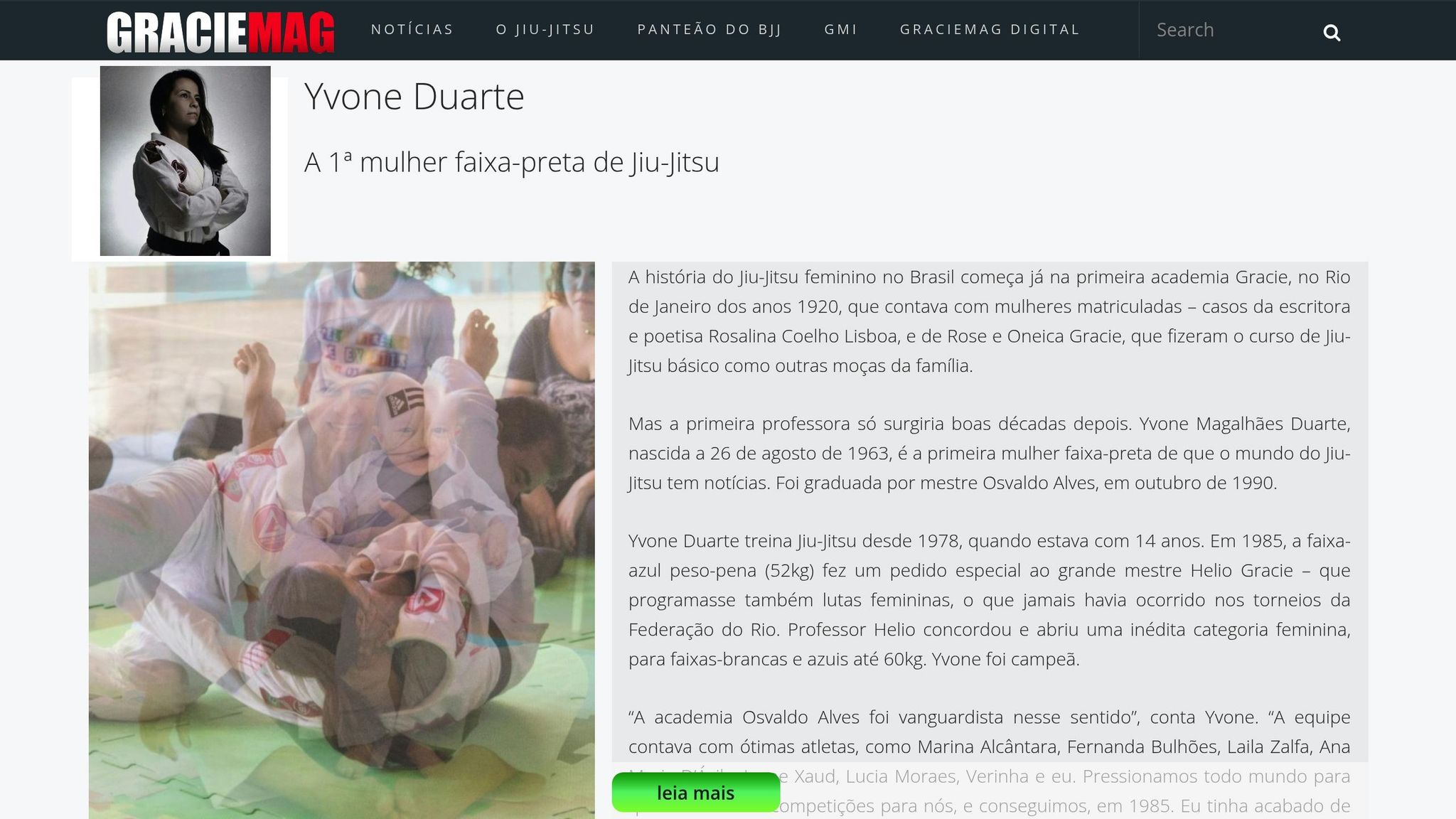
Black Belt Promotion by Osvaldo Alves
In October 1990, at the age of 27, Yvone Duarte reached a historic milestone in Brazilian Jiu-Jitsu (BJJ). After more than a decade of dedication to her craft, she earned her black belt from Master Osvaldo Alves. This achievement was groundbreaking - it was the first time a woman received a certifiable black belt from a BJJ federation. But this wasn’t just about personal success. It sent a powerful message: women had a rightful place at the highest levels of Brazilian Jiu-Jitsu.
This rank didn’t just symbolize her skill; it opened doors that had long been closed to women in the sport. Duarte broke new ground by becoming the first woman to train police recruits in BJJ self-defense at an academy in Brasília. Her black belt wasn’t just a belt - it was a key to opportunities that had previously been out of reach for female practitioners.
Founding a Women-Led Academy
With her black belt and a pioneering spirit, Duarte set out to make an even greater impact. In the late 1980s, she moved to Brasília to work at the University of Brasília. At the time, the city had only one established BJJ academy. Determined to change that, she waited until she earned her black belt to open her own school. Initially called "Black Belt", the academy was later renamed Equipe Yvone Duarte after advice from Sergio "Bolao." This made it the first BJJ academy led by a woman.
Duarte’s vision for her academy went beyond teaching techniques. She saw Brazilian Jiu-Jitsu as a way to empower women, particularly those facing violence and harassment in Brazil. She explained her mission in her own words:
"Today I see Jiu Jitsu as a way to empower women, make them safer and more confident. That has turned into my mission."
Her academy became known for its welcoming and inclusive atmosphere, steering clear of the intense rivalries that often defined other gyms in Brasília.
Duarte’s leadership didn’t stop at her academy. In 1997, she took on the challenge of reforming the local BJJ federation in Brasília. She helped organize competition standards and brought the federation under the umbrella of the CBJJ (now the IBJJF). Carlos Gracie Junior, impressed by her accomplishments, even invited her to lead the organization. Though she declined due to her pregnancy at the time, her efforts laid the groundwork for a more structured and professional BJJ scene in the capital, helping the sport thrive in the region.
#04 - Yvone Duarte - First women black belt in jiu jitsu - BJJHOOD Podcast
sbb-itb-d583f1e
Coral Belt Recognition and Historic Significance
In August 2021, Yvone Duarte made history when the International Brazilian Jiu-Jitsu Federation (IBJJF) and the Confederação Brasileira de Jiu-Jitsu (CBJJ) officially updated her rank to a 7th-degree coral belt. This marked the first time a woman had achieved this rank in Brazilian Jiu-Jitsu, a testament to her 43 years of dedication and contributions to the sport.
The coral belt, distinguished by its alternating red and black design, signifies the rank of "Master" in Brazilian Jiu-Jitsu. For over a century, this title had been exclusively held by men. Duarte’s promotion shattered this long-standing precedent, making her the only woman at the time to hold the 7th-degree rank. Her achievement not only broke barriers but also highlighted the broader challenges and advocacy efforts still needed within the sport.
Duarte herself underscored the significance of this milestone as more than just personal recognition. She framed it as a reflection of the systemic barriers women have faced in Brazilian Jiu-Jitsu:
"Being the woman in jiu-jitsu with the highest rank cannot be seen as personal merit. It was not earned in isolation... we have to ask what barriers have been put up for so many years that didn't allow other women to also achieve the coral belt in this day and age?"
Her promotion stands as a celebration of her remarkable journey and a powerful symbol of progress, challenging the institutional obstacles that have historically limited women’s advancement in the sport.
Challenges and Legacy in Brazilian Jiu-Jitsu
Breaking Barriers in a Male-Dominated Sport
Duarte's journey in Brazilian Jiu-Jitsu wasn't just about winning titles - it was about redefining what was possible for women in a sport dominated by men. Early on, she faced a glaring issue: there were no kimonos designed specifically for women. Practitioners like her had to make do with oversized, uncomfortable men's gis. On top of that, she had to challenge the stereotype that only the strongest and heaviest athletes could thrive in combat sports. Duarte proved that technical skill, speed, and flexibility could triumph over brute strength. Her undefeated competitive record, spanning an impressive 10 years, speaks volumes. She often dominated both her weight class and the absolute division, showcasing her unmatched mastery. Reflecting on her journey, Duarte said, "Responsibilities as a mother, wife, and professional often complicate a long-term training regimen", a testament to her ability to balance multiple roles while excelling at the highest levels.
Advocating for Women's Empowerment
Duarte turned her personal challenges into a mission to empower other women. Around 2016, she launched a self-defense and empowerment program at the University of Brasília (UnB). The program went beyond teaching Brazilian Jiu-Jitsu techniques - it incorporated group therapy sessions informed by surveys of local women about real-world threats like domestic violence and public assaults. The program's success led to its adoption at the Federal University of Roraima and even captured the attention of the United Nations. Recognizing her expertise, the UN invited Duarte to teach self-defense to female operators and staff working in conflict zones worldwide. She also broke new ground in the 1990s by becoming the first woman to teach martial arts to police recruits at the Brasília Police Academy. Duarte has been outspoken about the importance of creating safe spaces within the sport, emphasizing:
"We must never hide any form of abuse under the tatami. We must have the maturity to deal with accusations head on, investigate and involve the authorities when necessary. Jiu-Jitsu is not a safe haven for predators".
Her determination to address these issues has left a lasting impact, inspiring safer and more inclusive training environments.
Inspiring Future Generations
Duarte’s promotion to the coral belt isn’t just a personal achievement - it’s a symbol of progress for women in Brazilian Jiu-Jitsu. Her influence extends far beyond her own accolades, as she has worked tirelessly to build inclusive spaces and inspire female practitioners worldwide. Through trauma-informed coaching, she has trained instructors to create environments that are welcoming and responsive to all students. Duarte’s journey is a powerful reminder of the importance of perseverance, innovation, and empowerment in the face of adversity. Her advice to aspiring athletes is simple yet profound: focus on developing your technique, stay resilient, and never let life’s challenges push you away from the sport.
For those ready to follow in Duarte’s footsteps and begin their own Brazilian Jiu-Jitsu journey, the Brazilian Jiu-Jitsu Gyms Directory is a great place to find quality academies across the United States.
Conclusion
Yvone Duarte began her Brazilian Jiu-Jitsu journey at just 14 years old in 1978, and her historic promotion to a 7th-degree coral belt in August 2021 broke through barriers that had long limited opportunities for women in the sport. After dedicating 43 years to BJJ, her achievement became a powerful testament to the fact that women can thrive and sustain lifelong careers at the highest levels of this martial art.
Her milestones didn’t just change the competitive landscape - they redefined the role of women in Brazilian Jiu-Jitsu. From maintaining an undefeated competitive record to establishing women’s divisions, Duarte has carved out a path for future generations to follow. Beyond the mat, her efforts - whether training trauma survivors or instructing UN operators - have left an enduring impact that goes far beyond competition.
A fierce advocate for safety and inclusivity in the sport, Duarte has taken a firm stand against abuse in BJJ. Her philosophy captures her vision for the art:
"Jiu-Jitsu was created to bring people better quality of life, improved health and confidence. We must not fall into the trap of emulating the monsters Jiu-Jitsu is meant to defeat."
Yvone Duarte’s achievements and advocacy continue to inspire practitioners worldwide, proving that the influence of Brazilian Jiu-Jitsu can extend far beyond the dojo.
Looking to learn more or find a quality academy near you? Visit the Brazilian Jiu-Jitsu Gyms Directory.
FAQs
Why is Yvone Duarte's achievement as the first female coral belt important in Brazilian Jiu-Jitsu?
Yvone Duarte's achievement as the first female coral belt in Brazilian Jiu-Jitsu is a monumental moment in the sport's history. Earning this rank reflects not only her unmatched skill and commitment but also signifies a turning point for women in BJJ. Her success sends a powerful message, encouraging greater acknowledgment of female athletes and inspiring future generations to push boundaries in the discipline.
This accomplishment underscores her role as a pioneer, challenging norms in what has long been a male-dominated arena. It also highlights the progress and increasing inclusivity within Brazilian Jiu-Jitsu, paving the way for more women to excel at the highest levels.
What role did Yvone Duarte play in making BJJ competitions more inclusive for women?
Yvone Duarte broke new ground in 1990 when she became the first woman to earn a black belt in Brazilian Jiu-Jitsu. Later, she achieved another milestone as the first female coral belt. Her achievements not only broke barriers but also opened doors for women to reach the highest levels in the sport.
Duarte has been a vocal advocate for women’s inclusion in BJJ competitions, demonstrating that women can thrive as both athletes and leaders in the martial arts world. Her story continues to inspire female practitioners to push boundaries and achieve greatness in Brazilian Jiu-Jitsu.
What obstacles did Yvone Duarte overcome as a trailblazer for women in Brazilian Jiu-Jitsu?
Yvone Duarte shattered barriers in the male-dominated world of Brazilian Jiu-Jitsu, overcoming obstacles like limited opportunities for women, gender bias, and the glaring lack of female representation in the sport. Despite these challenges, she made history as the first woman to earn a black belt in BJJ and later reached the highly regarded coral belt - a rare and extraordinary accomplishment.
Her journey is a testament to her unwavering determination and exceptional skill. More importantly, it has lit a path for future generations of women, inspiring them to not only take part in Brazilian Jiu-Jitsu but to thrive in it. Yvone’s achievements have opened doors, pushing the sport toward greater inclusivity and acknowledgment of women’s contributions to martial arts.
Related articles
Share this article